How We Work
Four Steps From Requirement to Completion
Every engagement runs the same way, whether it is a single port call or an ongoing arrangement. The sequence is deliberately unglamorous — it is what makes the operation predictable.
Know What Is Happening. Know What Happens Next. Know Who Is Handling It.
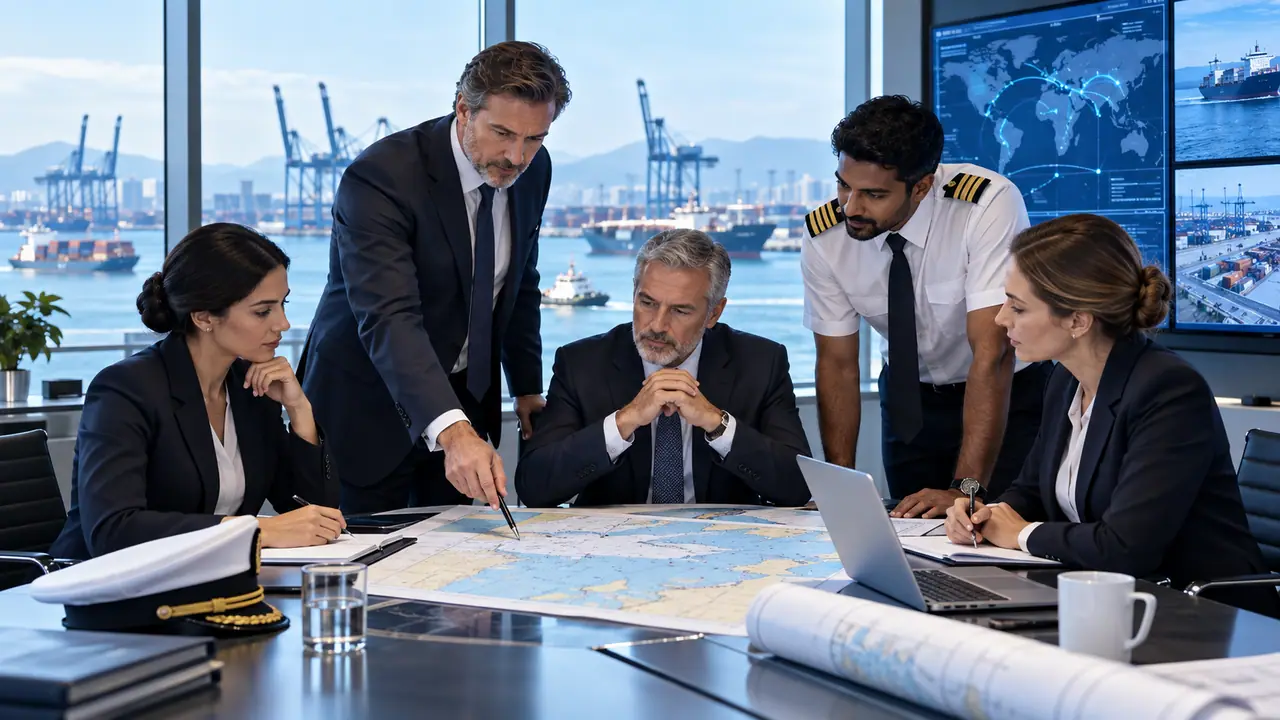
Operations review meeting around a chart table, with a working container port visible through the window behind.How does a Nigerian port agency engagement actually work?
A Nigerian port agency engagement runs in five stages: requirement review, operational planning against the specific port and cargo, confirmation of documentation and stakeholders, execution with named ownership of each next action, and reporting through to completion.
- 01
Tell Us What Is Moving
Vessel, cargo, container, crew, equipment or offshore requirement.
- what is moving and in which direction
- the port, terminal, jetty or marine location involved
- timing, including any fixed dates you are working to
- the commercial terms that determine who bears which cost
- who on your side is authorised to decide
- 02
We Review the Nigerian Operational Path
We assess the location, timing, documentation, port requirements, dependencies and potential delay points.
- the sequence the operation actually has to follow
- the documentation each interface will require
- the stakeholders that must be coordinated
- the points where this type of operation usually loses time
- what could create additional cost, and who would bear it
- 03
Vandyvah Coordinates Execution
Our team coordinates the relevant local stakeholders and operational actions.
- one Nigerian operations contact for the assignment
- one list of outstanding actions, each with a named owner and a due time
- service providers appointed and managed on your instruction
- exceptions escalated as specific lines, not as general concern
- cost risk flagged before it crystallises
- 04
You Receive Visibility Until Completion
We provide agreed updates, escalate exceptions and track the operation through the required milestones.
- milestone reporting issued as events occur
- a current statement of what is outstanding
- immediate notice when the operation stops, and why
- supporting records for the actions taken
- a completion report you can put in the file
Operating discipline
Who owns the next action?
Most avoidable delay in Nigerian marine operations comes from actions that are visible but unowned. In a multi-party operation an action can be perfectly clear to everyone and still not move, because each party reasonably believes it belongs to someone else.
The fix is narrower, not wider: one list, one named owner per line, one due time.
The action-ownership rule
- 1Maintain one list of outstanding actions for the operation.
- 2Assign each line to a named person, not to an organisation.
- 3Attach a due time to every line.
- 4Review the list at a fixed interval, not on demand.
- 5Escalate the line, not the operation, when a due time passes.
- 6Close each line with what actually happened.
Step 01
Start an Operations Review
Tell us what is moving, where it is and when. The review is the first step of the sequence above, not a sales call.
Frequently Asked Questions
- What does Vandyvah need before an engagement can start?
- What is moving and in which direction, the Nigerian port or marine location involved, the timing, the commercial terms determining who bears which cost, and one named person on the client side with authority to decide.
- How often will I be updated during a port call?
- An update cadence is agreed at the planning stage and held to. Exceptions are escalated when they occur rather than held until the next scheduled update, because a delay reported late has usually already cost money.
- Can Vandyvah take over an operation that has already gone wrong?
- Yes. Incident and recovery support is a defined service. The first step is establishing what has been completed, what is outstanding, what is accruing cost and who owns the next action.