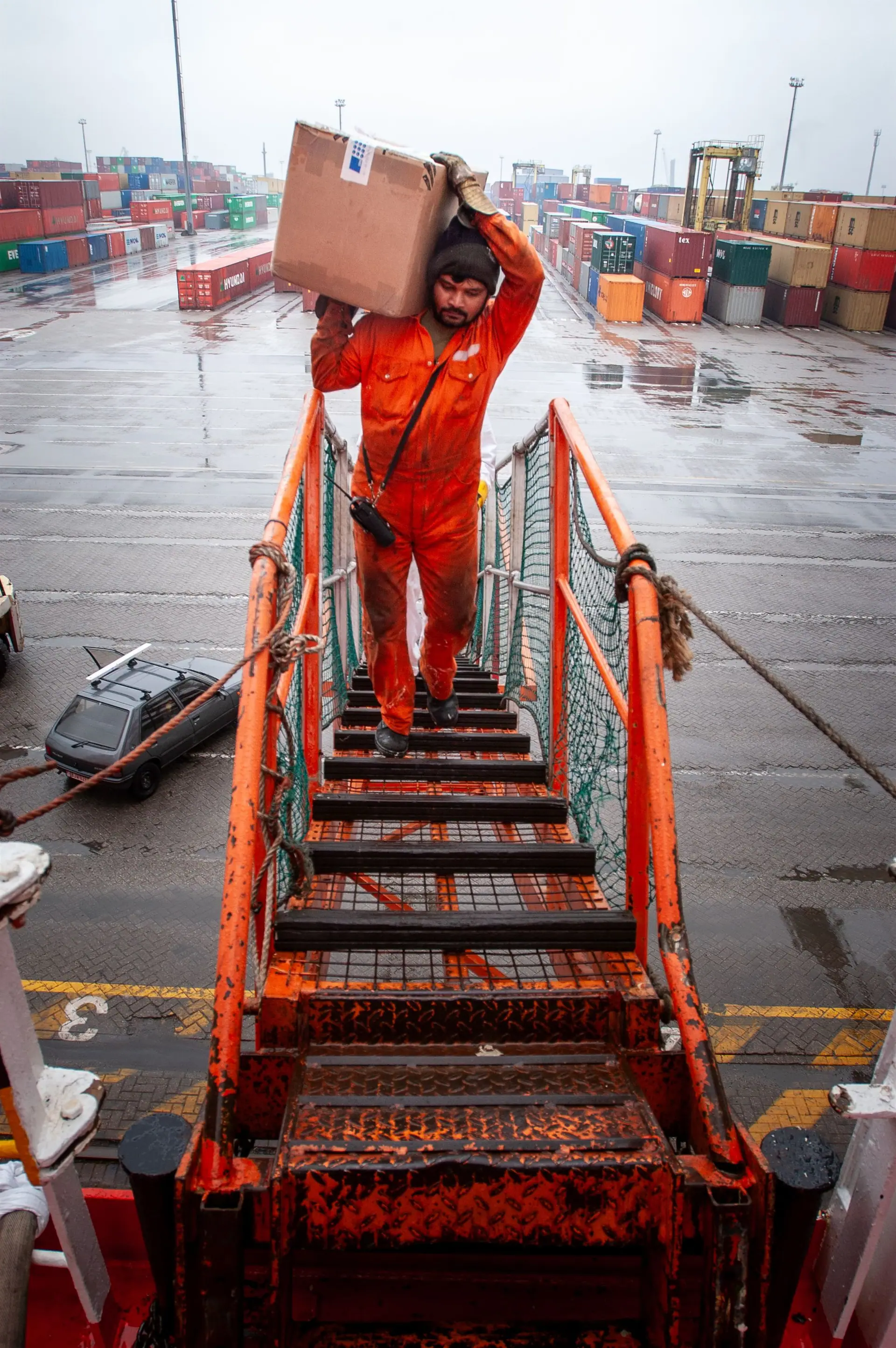
Why joining crew is the harder half of a crew change
A sign-off is a departure: the seafarer has a vessel, a ticket and a reason to leave. A sign-on is an arrival, and every step between the departure airport and the ship's gangway is a place where the plan can break. The joiner has to hold the right documents before boarding the flight, clear immigration in Lagos, be met at the airport, travel through the city and reach the vessel at the time the master expects.
Seen from the ship, a late joiner also means a departing seafarer who cannot be relieved, extended hours for the remaining crew and, in some cases, a vessel that cannot sail with the complement it needs. That pressure is why the arrival end deserves the same attention as the departure end.
Because the vessel's window is fixed and the joiner's journey is long, a joining crew member should be treated as a small project with its own timeline. Ship managers who plan the sign-off carefully but leave the joiners to arrange themselves usually find the weak point at the arrival end.
Visas and documents: start with the individual, not the crew list
Entry requirements depend on the seafarer's nationality, the capacity in which they are travelling and the way the vessel is being joined. A crew list that looks complete can hide one passport with too little validity, a missing seafarer document or an invitation letter that names the wrong port or vessel.
Check each joiner against their own documents rather than against the list. Confirm passport validity and blank pages, seafarer identity and certificates, vaccination and medical records, and whether a visa or letter of invitation is needed for that nationality. Where several joiners travel together, give each their own line in the plan, because one person's missing page should not hold up the rest of the group. Start the invitation and visa work as soon as the rotation is known, even when the date is provisional, and send the agent complete, legible copies so that immigration coordination can begin immediately.
Arrival day: from the aircraft to the gangway
On the day, the joiner's route has four parts, and each needs a named person. The first is airport immigration and baggage, where meet-and-assist helps the seafarer through the arrival process. The second is ground transport from the airport to the port or to a hotel. The third is accommodation, if the flight lands well before the vessel is ready. The fourth is the transfer to the ship, either to the gangway alongside or by launch boat when the vessel is at anchorage.
Lagos traffic can turn a short distance into a long journey, so transport should be timed with generous margins and the driver given the flight details, the joiner's name and a contact who can be reached the whole way. Baggage matters as well: tools, personal protective equipment and certificates carried in luggage need to arrive with the person, so check that nothing essential is in a bag that may be delayed. A joiner who arrives late in the evening may be better placed in a hotel overnight than driven straight to a port gate.
Timing: matching flights to the vessel
The date that matters is not the flight date but the date the vessel can actually receive people. Vessels at anchorage may move, berth schedules change and launch availability depends on weather and sea state. A flight booked too early costs hotel nights; a flight booked too tight leaves no margin for a delayed connection.
Book flights with realistic connection margins, build in an overnight buffer where the vessel's window is uncertain, and agree a decision point at which the sign-on is held rather than forced. Remember that a joiner's own rest matters too: after a long-haul flight and an overnight arrival, a few hours in a hotel often leave the seafarer better prepared to take over a watch than a straight transfer from the aircraft. Share the latest vessel position with the agent daily in the final week so transport and launch arrangements can follow the ship rather than the original plan.
Planning your next crew change with Vandyvah
Vandyvah's operations team in Nigeria coordinates joining and departing crew for ship managers, owners and operators: immigration coordination, airport meet-and-assist, ground transport, accommodation and transfers to the vessel, with one named contact on the day. We work from the individual's documents, keep the transport timed to the vessel's latest window and report each joiner's progress as it happens.
If a rotation is coming up, contact our operations team before the joiners book their flights. A document and timing review at that stage is the simplest way to make sure the crew who leave home on schedule are the crew who reach the vessel on schedule.
Joining crew: before the flights are booked
- each joiner's passport validity and blank pages checked individually
- seafarer identity documents and certificates confirmed in date
- visa or letter-of-invitation requirement settled for each nationality
- vaccination and medical records complete and legible
- copies of every document sent to the agent ahead of travel
- flight details shared with the agent, with realistic connection margins
- airport meet-and-assist and ground transport confirmed with a named contact
- hotel night held if the vessel's window is uncertain
Where delay usually develops
- visas and invitations started once flights were already booked
- a document problem found at immigration instead of at home
- road transport timed without margin for Lagos traffic
- flights landing before the vessel can receive people
- the vessel moving after transport and launch arrangements were fixed
What the principal should prepare
- a crew list checked against each person's actual documents
- complete copies of passports, seafarer documents and medical records
- flight itineraries and the vessel's latest expected window
- a named person able to decide on the day and approve spend
What Vandyvah can coordinate
- immigration coordination from the documents provided
- airport meet-and-assist for each arriving joiner
- ground transport timed to the flight and the vessel's window
- accommodation where a joiner needs a night ashore
- transfer to the gangway or by launch boat at anchorage
- progress updates on every joiner through to boarding