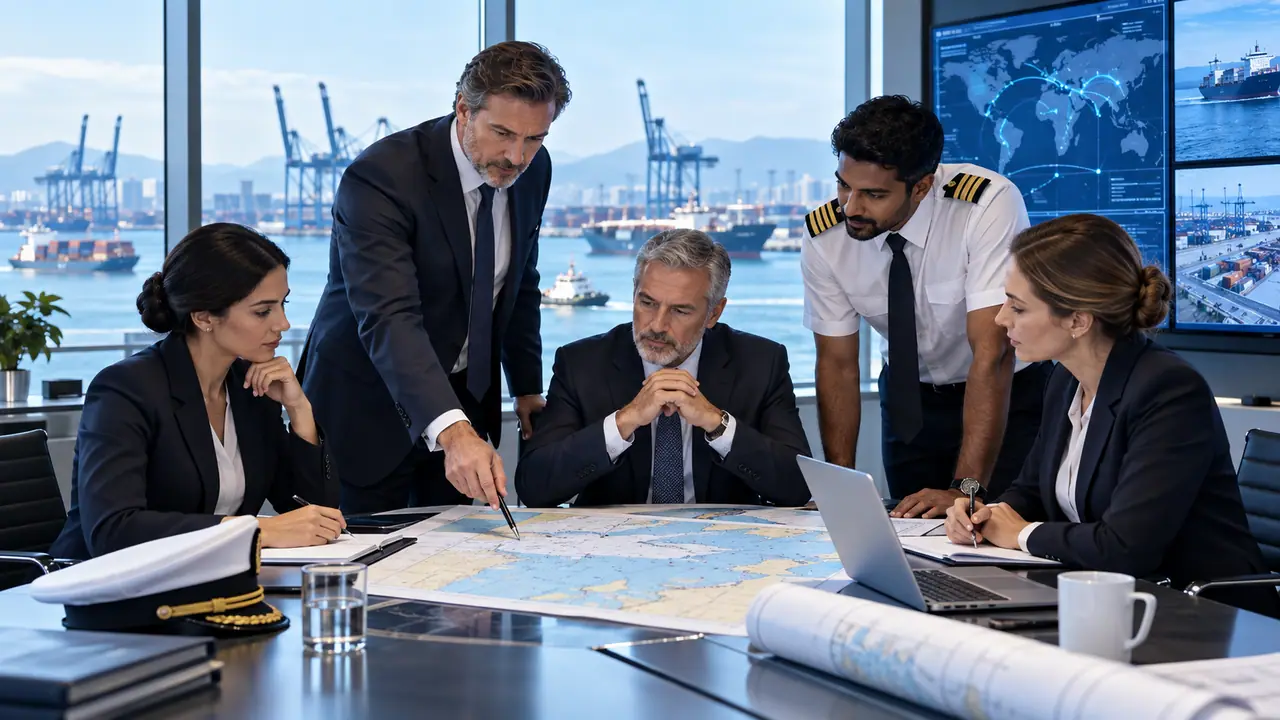
Why the first day matters most
After a grounding, collision, contact with a berth, cargo damage or crew injury, the owner is usually far from the vessel and learning the facts through the master's first messages. Those messages are often incomplete, and the position on board and alongside keeps changing as the vessel is secured, cargo is moved and people leave.
Evidence that is easy to collect in the first hours becomes hard to reconstruct a week later. Damage is repaired or covered, witnesses sail, logbook pages are copied but not secured, and the local picture is replaced by recollection. The aim of the first day is therefore not to settle anything. It is to capture an accurate, documented account while the facts can still be recovered.
Owners who handle this well have usually decided in advance who speaks to whom. That is worth doing before the next call to Nigeria, not after the incident.
Hours 0 to 6: one local contact and a first account
Start by establishing a single local point of contact who can be reached at any hour and who can act on instructions. When several parties each pass on a fragment, the owner receives conflicting versions and cannot tell which is current.
In the same period, ask the master for a short written account and timeline: what happened, when, the vessel's condition, any injuries, any pollution or cargo concern and what has been done so far. Request it as a factual note rather than a conclusion. Conclusions can follow once the evidence is in.
Tell the P&I club and its correspondent what you know, and ask them what they need first. Their requirements shape what is collected, so it is better to confirm them early than to gather everything and find the wrong things were prioritised.
Hours 6 to 18: evidence, surveyors and crew
Once the vessel is secure, preserve the evidence. That means dated photographs and video of the damage and the surrounding area, copies of the deck and engine logbooks, voyage data where it is available, the pilot's and tug masters' details, and the names and contact details of witnesses. Ask that originals are kept on board and not altered.
Decide early which surveyor or expert the owner or club wants appointed, and arrange attendance before repairs or cargo operations change the position. A surveyor who arrives after the damage has been covered can only describe what is left.
Look after people as well as paper. Crew statements should be taken in an orderly way and recorded with the date and time. An injured or distressed crew member needs medical attention with a documentation trail, and the family and the manager need to be informed promptly. Where a crew member must leave the vessel, plan transport and travel documents at the same time as treatment.
Hours 18 to 24: records, costs and the next step
Before the day ends, assemble what has been gathered into one pack with an index: the account, photographs, logs, statements, surveyor details and the instructions given. Add a running list of every instruction, who gave it and when it was acted on.
Keep a separate record of local spending. Owners who can show a clear line from each instruction to each cost find it far simpler to present the claim later, and it removes arguments about what was authorised.
Finish the day by agreeing the next updates: who reports, how often, and what decision the owner will need to take next. A matter that is live for several days benefits from a predictable rhythm of reports rather than ad hoc messages.
Planning your next vessel call with Vandyvah
Vandyvah's incident support team works with owners, managers and P&I correspondents to establish a local contact, coordinate evidence and document collection, arrange surveyors and local providers, support crew and medical needs and prepare the record a claim will depend on.
The best time to speak to us is before the vessel arrives, when we can agree contacts, authority for local spend and the first steps while nothing is urgent. Contact the operations team before your next call and we will set up the arrangements so that the first 24 hours are already planned.
The first 24 hours after an incident
- one local contact reachable at any hour
- written account and timeline from the master
- P&I club and correspondent informed, their first requirements confirmed
- dated photographs and video of damage and surroundings
- logbook copies and voyage data secured, originals kept on board
- surveyor or expert appointed and attendance arranged
- crew statements and medical care recorded with dates and times
- indexed document pack, instruction log and cost record started
Where delay usually develops
- evidence not preserved before the position changes
- surveyor attendance arranged after repairs or cargo moves
- no single local contact, so information arrives in fragments
- crew statements taken without a clear record
- instructions and costs not logged as they happen
What the principal should prepare
- a named person who can instruct locally at any hour
- P&I club, correspondent and insurer contact details
- authority for local spend and the choice of surveyor
- vessel particulars and crew details ready to share
What Vandyvah can coordinate
- an immediate local contact for the owner and club
- evidence and document collection in a dated, indexed record
- surveyor and local provider attendance
- crew, medical and repatriation coordination
- regular situation updates while the matter is live
- a consolidated pack for the principal and the club