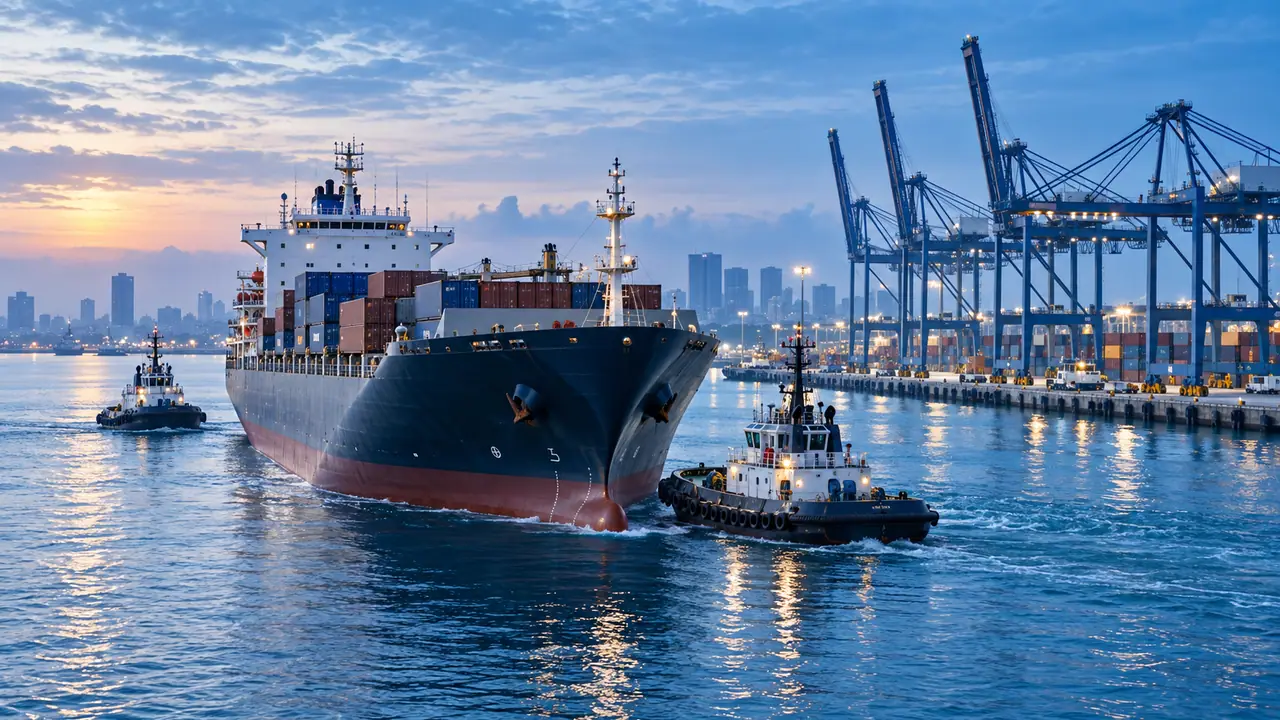
Ask for the tug plan before the pilot boards
Tug assistance is arranged for each movement, and the details are easiest to settle while the vessel is still on passage. The master's early questions are simple: how many tugs will be ordered, what type and power they are, and whether the arrangement suits the ship's size, draft and windage.
A fully laden tanker, a high-sided container vessel and a light bulk carrier in ballast behave very differently alongside a berth. Give the agent the vessel's particulars, including length, beam, displacement or draft, bow thruster and any steering or propulsion limitation, so that the request to the tug operator reflects the ship that is actually arriving.
Cargo and condition matter as much as size. A vessel arriving in ballast with a high freeboard catches the wind differently from one deep-laden, and a ship with dangerous cargo aboard may call for extra care in how the tugs are positioned. Mention both when you send the particulars.
If the vessel has a defect, however minor, that affects manoeuvring, say so at this stage. A tug plan built on a clean-ship assumption can leave the vessel waiting while a second unit is found.
Confirm timing and the meeting point
Tugs are ordered against the pilot boarding time and the berth window, and both can move. Confirm the expected meeting point, the time the tugs will be ready, and who will tell the bridge if the plan changes. A vessel that slows for a tug that has not been told of a new time loses its place in the sequence, and a tug that waits for a vessel that is late can be released to other work.
Keep the agent updated on your estimated arrival at the pilot station, and update it when speed or weather changes the estimate. A revised time passed on early is far more useful than an accurate one passed on after the tugs have stood down.
Ask what will happen if the berth is not free on arrival. Whether the vessel will hold at anchorage, and whether tugs will be needed for anchoring or shifting later, belongs in the same conversation.
If tides or a draft restriction govern the berth, state your draft clearly and early. A tug plan built around a tidal window can be adjusted calmly in advance, but is hard to rebuild when the ship is already at the pilot station.
Lines, fenders and the bridge conversation
The way the tug is made fast should be agreed before the vessel is close to the quay. Confirm whether the tugs will use the ship's own lines or their own, which fairleads and bitts will be used, and whether the vessel's mooring winches and lines are ready to be used at the same time. Rigged, tested equipment on deck saves minutes where minutes matter.
Agree the communication channel and language for the bridge, the pilot and the tugs. Note the working channel, the call signs and the signals to be used if radio contact is lost. Brief the deck party on where the tugs will be, so that nobody is working on a line when a tug takes the strain.
Check the tug's position relative to the vessel's gear. Gangways, pilot ladders and accommodation ladders should be stowed or kept clear of the tug's working side until the vessel is secure.
Where possible, hold a short briefing on the bridge before the tugs arrive. When the master, the officers and the deck party each know which tug goes where, the first line is passed calmly rather than after a round of questions over the radio.
Plan the departure as carefully as the arrival
The tug request for sailing is a separate order and is often forgotten until the cargo is complete. Tell the agent as soon as the expected completion time is known, and confirm the tugs, the pilot and the berth release against that time.
Be ready to sail when the tugs arrive. Documents signed, cargo and crew accounted for and the deck secured for sea mean that the tug time is spent on the manoeuvre rather than waiting alongside. If the departure is delayed, tell the agent immediately so the tugs can be moved to another job instead of being kept standing.
After the movement, note any difficulty with the tugs, lines or communications and pass it to the agent. Records made while the details are fresh help the next call go more smoothly.
Planning your next vessel call with Vandyvah
Vandyvah's operations team coordinates the tug, pilot and berth requests around the vessel's particulars and timetable, passes the master's estimated arrival to everyone concerned, and tells the bridge promptly when the plan changes. The aim is that on the day the tugs, the pilot and the berth are ready when the ship is.
If a vessel is heading for Nigeria, contact the operations team before she arrives, ideally while the master is still planning the passage. A short exchange about particulars, cargo and timing lets us line up the movement and keep the master informed.
Master's tug assistance checklist
- vessel particulars sent to the agent, including any manoeuvring limitation
- number and power of tugs confirmed for the loaded or ballast condition
- pilot boarding time and tug meeting point confirmed
- updated estimated arrival passed on whenever it changes
- line and fairlead arrangements agreed, and mooring gear ready
- working radio channel and fallback signals agreed
- gangways and ladders kept clear of the tug's working side
- departure tugs and pilot ordered against the expected completion time
Where delay usually develops
- vessel particulars or defects not passed on before the tug order
- arrival estimates changing without the agent being told
- berth not free when the tugs are ready
- mooring gear or lines not ready when the tug arrives
- departure tugs ordered late or after cargo completion
- communications unclear between the bridge, the pilot and the tugs
What the principal should prepare
- full vessel particulars and any manoeuvring limitations
- an up-to-date estimated arrival and cargo completion time
- the vessel's mooring and line arrangements
- approval for the tug and pilot arrangements proposed
What Vandyvah can coordinate
- tug requests matched to the vessel's size and condition
- pilot boarding and tug meeting times
- berth readiness and shifting arrangements
- passing the master's updated estimates to all parties
- departure tugs and pilot against cargo completion
- prompt notice to the bridge when the plan changes